Complete 2026 Guide for Private Sellers
Selling a car in Massachusetts requires careful attention to state-specific regulations, proper documentation, and strategic planning to maximize your vehicle’s value. Whether you’re upgrading to a newer model or simply need to part with your current vehicle, understanding the Massachusetts car selling process will save you time, money, and potential legal complications.
The Bay State’s vehicle sales regulations protect both buyers and sellers through comprehensive disclosure requirements and structured transfer procedures. With Massachusetts ranking among the top 10 states for used car sales volume in 2026, the market remains robust for private sellers who follow proper protocols.
Gather Necessary Documents
Successfully selling a car in Massachusetts begins with assembling the correct paperwork. Missing or incomplete documentation can delay your sale and potentially expose you to liability issues.
Certificate of Title Requirements
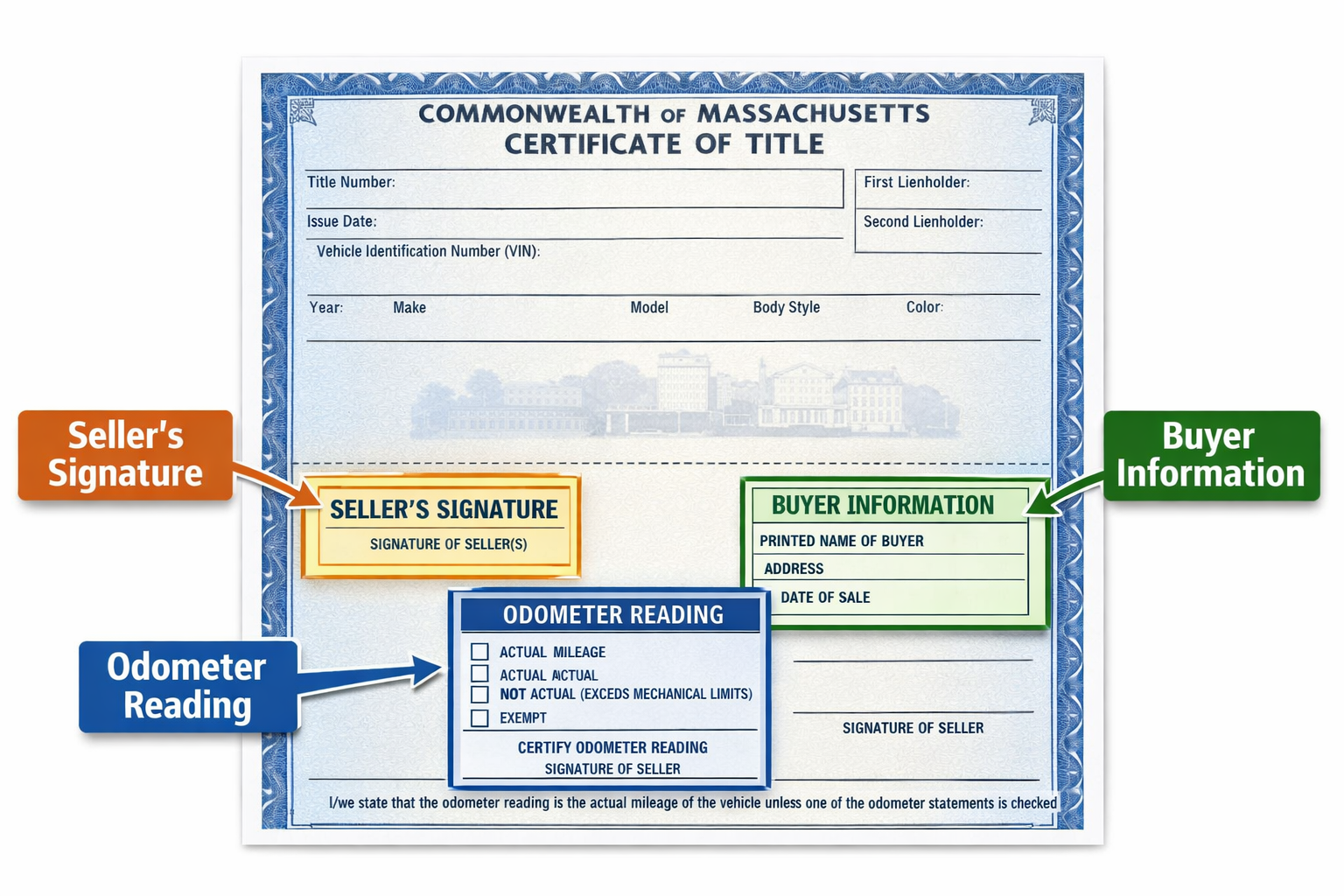
The certificate of title serves as the primary proof of ownership and must be properly completed for legal transfer. On the back of your Massachusetts title certificate, you’ll find the “Assignment of Title” section that requires specific information:
Required title information includes:
- Complete date of sale (month, day, year)
- Final purchase price in dollars
- Buyer’s full legal name as it appears on their identification
- Buyer’s complete current address
- Your signature as the seller
- Buyer’s signature (completed during the transaction)
- Current odometer reading at time of sale
If your vehicle has a lien, you cannot complete the sale until the lienholder releases their interest. Contact your lender to obtain a lien release letter or have them send the title directly to you once the loan is satisfied.
Essential Documentation Checklist
| Document | Description | Required? | Notes |
|---|---|---|---|
| Certificate of Title | Proof of vehicle ownership | Yes | Must be original, no copies accepted |
| Current Registration | Proof of Massachusetts registration | Yes | Shows vehicle is legally registered |
| Lien Release | Documentation of loan satisfaction | If applicable | Required if vehicle has outstanding loan |
| Maintenance Records | Service history documentation | Recommended | Increases buyer confidence and value |
| Inspection Certificate | Current Massachusetts safety/emissions inspection | If applicable | Required for vehicles over 6 years old |
| Vehicle History Report | Third-party vehicle background check | Optional | Builds trust with potential buyers |
Bill of Sale Considerations
While Massachusetts doesn’t legally require a bill of sale for private party transactions, creating one protects both parties and provides additional documentation of the transaction terms.
A comprehensive bill of sale should include:
- Vehicle identification number (VIN)
- Make, model, year, and mileage
- Sale price and payment method
- Date and location of sale
- “As-is” clause (if applicable)
- Both parties’ signatures and contact information
MA Forms Needed for Selling a Car
Understanding which forms apply to your specific situation prevents delays and ensures compliance with Massachusetts regulations.
Standard Forms for Most Sales
| Form | Purpose | Who Completes | Where to Obtain |
|---|---|---|---|
| Registration and Title Application (RMV-1) | Buyer registers vehicle in their name | Buyer | Mass.gov RMV Forms |
| Motor Vehicle Sales Tax Form | Reports sale for tax purposes | Buyer | Massachusetts Department of Revenue |
| Bill of Sale (optional) | Documents transaction details | Seller and Buyer | Massachusetts Bill of Sale Forms |
Special Circumstance Forms
Family Transfer Forms (MVU-26 or MVU-24)
When selling to immediate family members (spouse, parent, child, or sibling), special forms allow exemption from Massachusetts sales tax. The family relationship must be documented with appropriate identification.
Gift Transfer Documentation
Vehicles given as gifts require specific documentation to avoid sales tax implications. The recipient must still register the vehicle and pay registration fees.
Sales Tax Implications
Massachusetts imposes a 6.25% sales tax on vehicle purchases. As the seller, you’re not responsible for collecting this tax, but you should inform buyers of their obligation to pay it during registration.
Private party sales between family members may qualify for tax exemptions, but documentation proving the relationship is required.
Complete the Sale Safely and Legally
The actual transaction requires careful attention to timing, location, and payment methods to protect your interests and ensure legal compliance.
Pre-Sale Preparation Steps
Vehicle Inspection and Disclosure
Massachusetts law mandates that private sellers disclose all known defects that could impair vehicle safety or substantially affect its use. This includes:
- Engine or transmission problems
- Brake system issues
- Structural damage from accidents
- Electrical system malfunctions
- Any safety-related recalls
Payment Verification
Accept only verified payment methods to avoid fraud:
- Cash (for amounts under $10,000)
- Certified bank checks or money orders
- Bank wire transfers completed at the financial institution
- Avoid personal checks, online payment apps, or cryptocurrency
License Plate Handling
Massachusetts requires sellers to remove license plates before completing the sale. You have several options for your plates:
Plate Transfer Options:
- Transfer to another vehicle you own within 7 days
- Return to RMV for cancellation
- Destroy plates if they’re damaged or expired
Never allow buyers to drive away with your plates, as you remain liable for any violations or incidents until the plates are officially transferred or cancelled.
Optimal Sale Locations
RMV Office Transactions
Completing your sale at a Massachusetts RMV office provides the safest environment for both parties. RMV staff can verify documentation, process title transfers immediately, and ensure all legal requirements are met.
Alternative Safe Locations:
- Bank parking lots with security cameras
- Police station visitor parking areas
- Busy public locations during daylight hours
- Avoid residential areas or isolated locations
Additional Legal Considerations and Consumer Protection
Massachusetts Lemon Law for Private Sales
Massachusetts extends limited lemon law protection to private party used car sales, creating specific obligations for sellers.
Seller Disclosure Requirements:
- All known mechanical defects must be disclosed in writing
- Safety-related issues require immediate disclosure
- Failure to disclose known defects may void the sale
Buyer Protection Rights:
- 30-day right to cancel if undisclosed defects are discovered
- Right to repair cost recovery for undisclosed safety issues
- Legal recourse for fraudulent misrepresentation
Post-Sale Responsibilities
Liability Transfer
Your liability for the vehicle continues until the buyer completes registration transfer. Notify your insurance company immediately after the sale to avoid coverage gaps or liability issues.
Record Keeping
Maintain copies of all sale documentation for at least one year, including:
- Signed title transfer documents
- Bill of sale
- Payment receipts
- Any correspondence with the buyer
How to Obtain a Duplicate Certificate of Title in Massachusetts
Lost or damaged titles are common issues that can complicate vehicle sales. Massachusetts provides straightforward procedures for obtaining duplicate titles.
Duplicate Title Application Process
Required Steps:
- Complete Application for Duplicate Certificate of Title (Form T20558)
- Provide current vehicle identification number (VIN)
- Submit driver’s license number and current odometer reading
- Pay $25 duplicate title fee
Application Methods:
- Online: Through Massachusetts RMV online services portal
- By Mail: Send completed application and fee to RMV Title Division
- In Person: Visit any Massachusetts RMV office
Processing Times:
- Online applications: 7-10 business days
- Mail applications: 2-3 weeks
- In-person applications: Same day (if all requirements met)
Special Circumstances for Duplicate Titles
Outstanding Liens
If your vehicle has an outstanding loan, contact your lender first. Many lenders hold the original title and can provide it directly once the loan is satisfied.
Lost Title with Lien Release
When you’ve paid off your loan but lost the title, you’ll need:
- Lien release letter from the financial institution
- Completed duplicate title application
- Standard duplicate title fee
Notarization Requirements for Bills of Sale
Massachusetts requires notarization for bills of sale in vehicle transactions, adding an extra layer of legal protection and authenticity.
Notarization Process
Required Elements for Notarization:
- Both parties must appear before the notary with valid identification
- All signatures must be completed in the notary’s presence
- Notary must verify the identity of all signers
- Notary fee typically ranges from $5-15
Finding Notary Services:
- Banks and credit unions (often free for customers)
- UPS stores and shipping centers
- Insurance agency offices
- Mobile notary services (higher fees but convenient)
Bill of Sale Content Requirements
Mandatory Information:
- Seller’s full legal name and current address
- Buyer’s full legal name and current address
- Vehicle year, make, model, and VIN number
- Current odometer reading
- Purchase price and date of sale
- Signatures of both parties
Maximizing Your Vehicle’s Sale Value
Understanding market conditions and pricing strategies helps Massachusetts sellers achieve optimal returns on their vehicles.
Market Research and Pricing
Valuation Resources:
- Kelley Blue Book private party values
- Edmunds True Market Value estimates
- AutoTrader local market analysis
- Cars.com comparable vehicle listings
Massachusetts Market Factors:
- Seasonal demand fluctuations (higher demand in spring/summer)
- Regional preferences for all-wheel drive vehicles
- Impact of Massachusetts inspection requirements on older vehicles
- Electric vehicle incentives affecting traditional car values
Vehicle Preparation Tips
Cosmetic Improvements:
- Professional detailing can increase value by $500-1,500
- Minor paint touch-ups and scratch repair
- Interior cleaning and odor elimination
- Tire replacement if severely worn
Mechanical Preparations:
- Complete current Massachusetts inspection
- Address any check engine lights or warning indicators
- Perform basic maintenance (oil change, fluid top-offs)
- Gather maintenance records to demonstrate care
For more comprehensive guidance on maximizing your vehicle’s value, visit our detailed guide to selling your car.
Alternative Selling Options in Massachusetts
Professional Car Buying Services
For sellers seeking convenience over maximum profit, professional car buying services offer streamlined transactions with guaranteed purchases.
Advantages of Professional Services:
- No advertising or showing requirements
- Immediate cash offers
- Handling of all paperwork and title transfers
- No liability for post-sale issues
The Buy Center Advantage
The Buy Center specializes in Massachusetts vehicle purchases, offering competitive pricing and professional service throughout Western Massachusetts.
Simple Process:
- Online vehicle appraisal at CrazyJCars.com
- Receive instant competitive offer
- Schedule convenient inspection appointment
- Complete sale with immediate payment
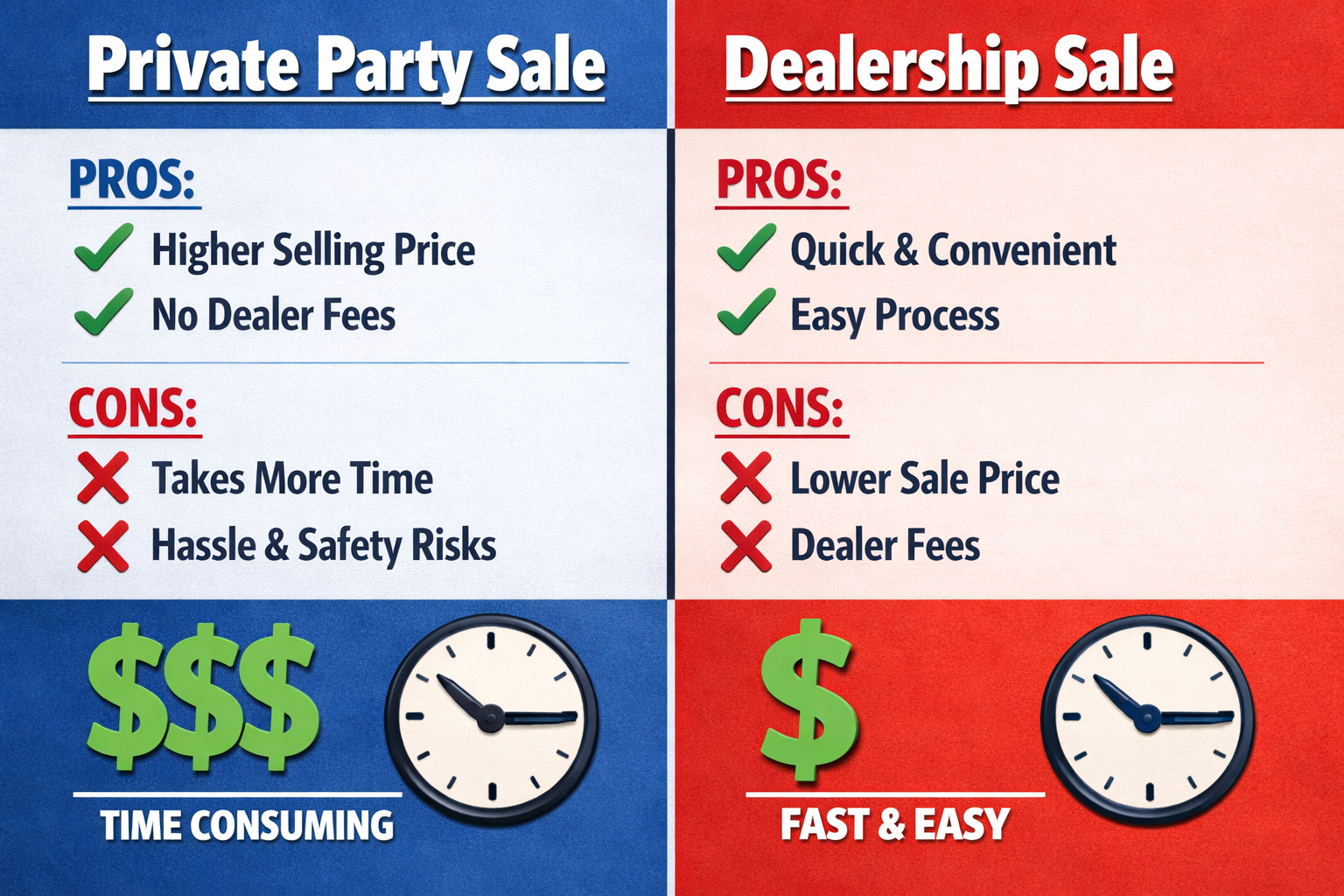
Comparing Selling Methods
| Method | Time Investment | Potential Profit | Convenience | Risk Level |
|---|---|---|---|---|
| Private Party Sale | High (2-6 weeks) | Highest | Low | Medium-High |
| Dealer Trade-In | Low (1 day) | Lowest | Highest | Lowest |
| Professional Buyer | Medium (3-5 days) | Medium-High | High | Low |
| Online Platforms | Medium (1-3 weeks) | Medium | Medium | Medium |
Understanding Massachusetts Vehicle Registration Transfer
The registration transfer process affects both sellers and buyers, with specific timing requirements that impact liability and legal compliance.
Buyer Registration Requirements
Massachusetts law requires new owners to register vehicles within 7 days of purchase. As the seller, understanding this timeline helps you set appropriate expectations and protect your interests.
Required Documents for Buyer Registration:
- Completed title transfer
- Proof of Massachusetts auto insurance
- Valid driver’s license or state ID
- Payment for registration fees and sales tax
- Current inspection certificate (if applicable)
Registration Fee Structure
Massachusetts registration fees vary by vehicle weight and type:
- Passenger vehicles under 3,000 lbs: $60
- Passenger vehicles 3,000-5,000 lbs: $90
- Vehicles over 5,000 lbs: $120
- Motorcycles: $48
- Commercial vehicles: Variable based on weight and use
Seasonal Considerations for Massachusetts Car Sales
Optimal Selling Seasons
Spring (March-May):
- Highest buyer activity as weather improves
- Tax refund season increases buyer purchasing power
- Ideal time for convertibles and motorcycles
Summer (June-August):
- Peak selling season for most vehicle types
- Vacation-related vehicle purchases increase
- Best time for outdoor vehicle showings
Fall (September-November):
- All-wheel drive and SUV demand increases
- Back-to-school vehicle purchases
- Good time for reliable commuter cars
Winter (December-February):
- Lowest overall demand but less competition
- Snow-capable vehicles command premium prices
- Holiday bonuses may motivate some buyers
Weather-Related Selling Tips
Massachusetts weather can significantly impact your selling timeline and success rate.
Winter Selling Strategies:
- Emphasize winter-ready features (AWD, snow tires, heated seats)
- Ensure vehicle starts reliably in cold weather
- Clear snow and ice before showings
- Consider indoor showing locations
Summer Selling Advantages:
- Better vehicle presentation in good weather
- Easier for buyers to inspect exterior condition
- More flexible showing schedules with longer daylight
Legal Protections and Dispute Resolution
Understanding Seller Liability
Massachusetts law provides specific protections for private party sellers while establishing clear responsibilities for disclosure and honest representation.
Limited Liability Protection:
- “As-is” sales are generally enforceable for private parties
- Sellers not required to provide warranties
- Liability limited to disclosed information accuracy
Disclosure Obligations:
- Known safety defects must be disclosed
- Material damage history should be revealed
- Odometer tampering is a federal crime
Dispute Prevention Strategies
Documentation Best Practices:
- Photograph vehicle condition before sale
- Save all communication with buyers
- Use written agreements for all terms
- Obtain receipt for payment
Professional Mediation Resources:
- Massachusetts Attorney General’s Office consumer protection division
- Better Business Bureau dispute resolution services
- Small claims court for monetary disputes under $7,000
Conclusion
Selling a car in Massachusetts requires attention to state-specific regulations, proper documentation, and strategic planning to achieve the best outcome. By following the comprehensive guidelines outlined in this guide, you can navigate the process confidently while protecting your interests and maximizing your vehicle’s value.
Whether you choose to sell privately for maximum profit or work with a professional service like The Buy Center for convenience, understanding Massachusetts requirements ensures a smooth, legal transaction.
The key to successful car selling in Massachusetts lies in thorough preparation, honest disclosure, and careful attention to legal requirements. Take time to gather proper documentation, research your vehicle’s value, and choose the selling method that best fits your timeline and goals.
For additional resources on vehicle sales and current market conditions in Massachusetts, explore our Massachusetts category for the latest updates and local market insights.
Ready to sell your car? Contact The Buy Center at (413) 729-8600 or visit CrazyJCars.com for a free, no-obligation appraisal and discover why Massachusetts sellers trust our professional, transparent process.